Poison Often Wears a Clean Shirt
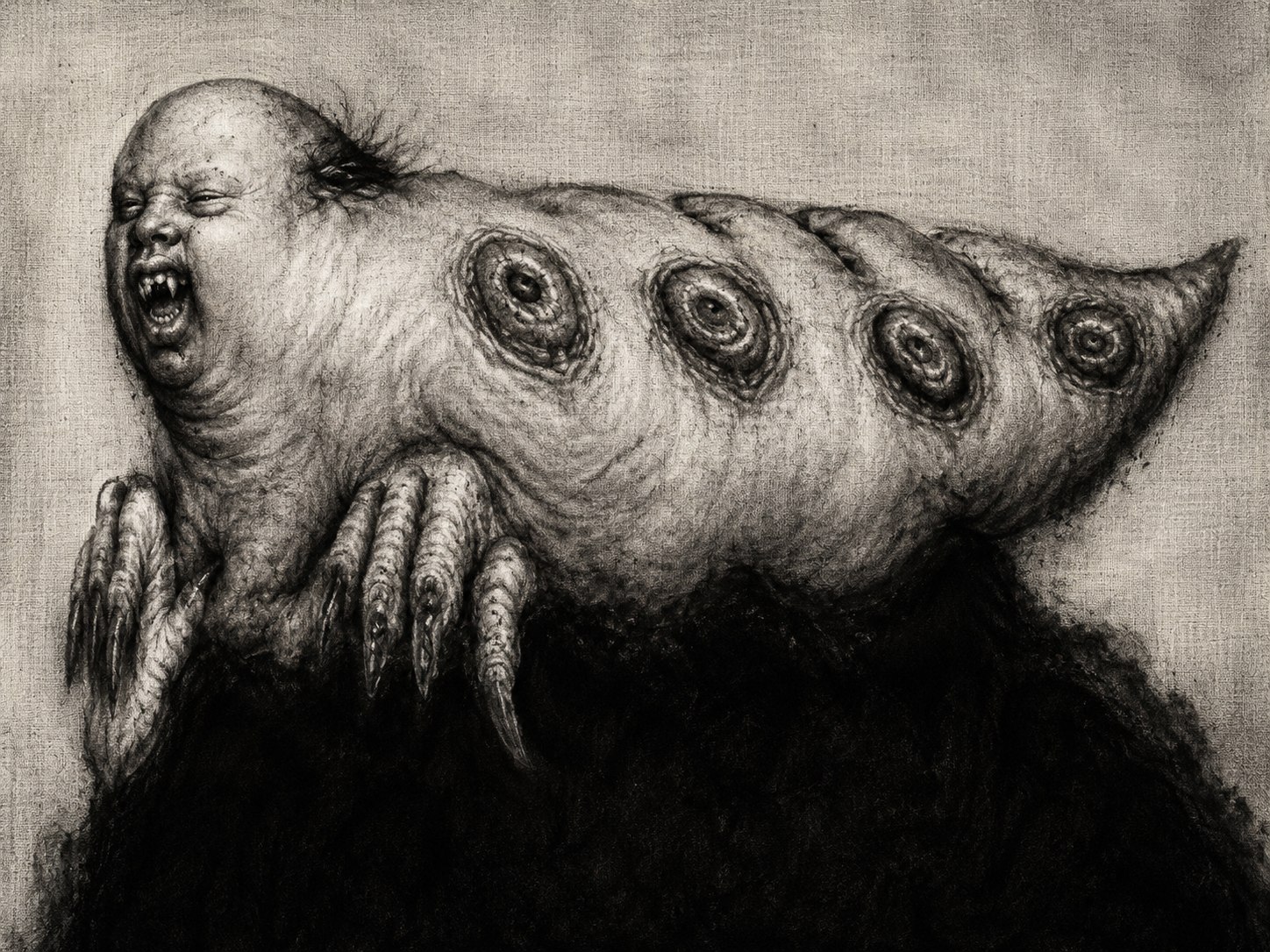
Poisonous people do not usually arrive with thunder, cape, skull necklace, and background music. That would be too easy. Even I, sitting in the southern fringe of Calcutta with a half-dead ceiling fan, a cup of tea going cold, and the general financial confidence of a damp matchstick, could detect that fellow from a distance.
No. The truly dangerous ones arrive looking normal.
That is the trick.
They wear clean shirts. They say “take care” at the end of phone calls. They remember birthdays when it is socially useful. They know when to lower their voice, when to look hurt, when to say “I was only trying to help.” Some of them carry office bags. Some carry family reputation. Some carry English. Some carry a sweet smile like those suspicious sweets in a neighborhood shop which look glorious from outside and taste faintly of old refrigerator.
And by the time you realize what they are, the damage is already sitting inside your life with its shoes off.
This is the frightening part. Creeps do not always look creepy. Pernicious people do not come labeled like medicine bottles. “Warning: may cause anxiety, self-doubt, sleeplessness, humiliation, loss of confidence, and a permanent distrust of cheerful humans.” Life would be much more convenient if they did. We could read the label, nod wisely, and keep them outside the gate like a political canvasser during lunch.
But society gives such people excellent camouflage. Respectability. Politeness. Family position. A calm voice. A little education. A little moral language. A little public helpfulness. Add two drops of fake concern and stir vigorously.
There you have it: a social toxin in festival packaging.
In Calcutta, this species thrives beautifully, like fungus after rain. Not because Calcutta is worse than anywhere else. Please. Every city has its own aquarium of dangerous fish. But here, in our middle-class and lower-middle-class lanes, everyone knows everyone, or at least claims to know enough to interfere. The grocer knows your sugar intake. The para uncle knows your employment status. The distant relative knows why you are unmarried, unemployed, moody, thin, fat, quiet, angry, too educated, not educated enough, and generally unsuitable for normal human circulation.
This creates perfect cover for the poisonous person. They do not need to attack directly. They only have to adjust the air around you.
A small comment here.
A careful insult there.
A compliment with a fishbone inside.
“You are very talented, but somehow you never manage.”
“You are too sensitive.”
“I said it for your own good.”
“Everyone is talking.”
That last one is a masterpiece. “Everyone is talking” is not a sentence. It is a mosquito coil of social terror. It fills the room slowly, and soon you are choking on invisible smoke.
The clever poisonous person rarely shouts first. Shouting leaves evidence. Instead, they shrink you by inches. Around them, you start editing yourself. You explain more. You laugh less. You rehearse conversations before having them. You become careful, then smaller, then tired. One day you notice that your own personality has become like an old towel on a clothesline in monsoon weather, damp, sagging, and faintly defeated.
And the poisonous person says, “Why are you so negative?”
Beautiful.
A snake, if it had a public relations department, would say exactly this.
The worst ones are not merely cruel. Cruelty is at least plain. A cruel person throws the stone and you see the hand. The more refined variety throws the stone, hides the hand, bandages your head, and later tells people how difficult you are to care for.
This is why their damage lasts. It is not only what they do. It is what they make you doubt.
They make you doubt your memory.
They make you doubt your reading of a room.
They make you doubt your anger, which is often the last honest watchman standing at the gate.
They make you doubt your own dislike of being mistreated, as if dignity were some luxury imported from Switzerland and not an ordinary human requirement, like sleep or clean water.
And then comes that ugly little thing called schadenfreude: pleasure in someone else’s pain. It is a long German word, but the behavior is available locally without import duty. You can see it in the person who glows quietly when your life cracks. They will not dance openly. That would be vulgar. They will offer advice. They will sigh. They will say, “I knew this would happen.” They will lean over your ruin with the solemn face of a doctor and the private delight of a crow near a fish market.
A decent person may criticize you. A good friend may say a hard thing. Someone who loves you may tell you that you are making a mess.
But they do not bloom when you bleed.
Remember that. It is a useful test.
The ordinary reader may ask, quite reasonably, “Then how do we detect them early?” Ah. There is the pickle jar. Tight lid. Slippery fingers. No heroic solution.
You cannot live as if every human being is a pending court case. That way madness lies, and also very poor tea. Trust is necessary. We trust the barber with a blade near the neck. We trust the bus driver with a road full of lunatics. We trust the man at the momo stall not to conduct biological warfare in chutney form. Human life is built on trust. Without it, the day collapses before breakfast.
But trust should not mean blindness.
The key is not one incident. Everyone behaves badly sometimes. I have behaved badly. You have behaved badly. Even the most peaceful person in a power cut in May can become a small philosophical monster. One bad day does not make a villain.
A pattern does.
Watch the pattern.
Does this person repeatedly leave you confused?
Do they make you feel guilty after hurting you?
Do they collect your weaknesses like old newspapers and later sell them back to you as insults?
Do they turn people against each other quietly?
Do they apologize only when trapped?
Do they treat boundaries as betrayal?
Do they say they love truth but punish anyone who speaks it?
One incident is weather. A pattern is climate.
That sentence took me fifty-one years, some American healthcare offices, some Calcutta rooms, some unpaid invoices, some mood swings, some bad trust, and a few mental bruises to learn. I offer it to you free, though frankly in this economy I should invoice somebody.
The truly poisonous person does not simply hurt you. They recruit the world’s laziness. Most people do not want complicated truth. They want the simpler version. The polite person must be good. The calm person must be reasonable. The successful person must be right. The smiling person must be harmless. The person who cries first must be the victim.
This is how camouflage works.
The tiger in the forest does not wear a signboard saying “tiger.” It wears stripes that look like shadow. The social predator wears manners that look like character.
And we, poor decorative fools, often clap for the manners.
Here is another small ugliness. Many poisonous people are loved by outsiders. This is not a contradiction. It is part of the machinery. They may be charming to guests, generous in public, useful at ceremonies, articulate in meetings, even funny at dinner. The waiter likes them. The neighbor likes them. The cousin who meets them twice a year says, “But he is such a nice person.”
Yes. To you.
A mosquito is also very respectful to people it is not biting.
This is why victims often feel mad before they feel angry. The public evidence does not match the private experience. Outside, the person looks polished. Inside, near them, your nervous system behaves like a stray dog before a storm. Something in you knows. Your stomach tightens. Your voice changes. Your words become careful. Your sleep gets thin.
The body is often quicker than the biography.
Listen to it.
Not always blindly. The body can also panic from old wounds. But do not dismiss it like a foolish servant. Sometimes it is the only honest clerk in the office, stamping the file in red ink while your polite brain is still offering tea.
Boundaries are not cruelty. This took me long to understand, because many of us were raised to confuse tolerance with goodness. We think saying no is rude. We think distance is arrogance. We think explanation is compulsory. So we keep explaining to people who are not confused. They understand perfectly. They simply disagree with your right to exist without their thumb on your neck.
A boundary is not a speech. It is a door.
Some people can stand outside it.
Some people must.
There may be no grand justice. Let us not turn this into cinema. Many harmful people never confess. They do not collapse in the final scene. They grow old. They get invited to weddings. They are praised after dinner. They are remembered as “strong personalities,” which is often society’s polite phrase for someone who left emotional debris everywhere and made the weaker people sweep it.
So what remains?
Pattern recognition.
Distance.
Less explanation.
More trust in your own repeated experience.
A refusal to let one poisonous person turn the whole human race into a suspect lineup.
That last part matters. If they make you suspicious of everyone, they have poisoned the well even after leaving the village. The task is not to become hard like old cement. The task is to become less available to harm while remaining available to life. Difficult. Annoying. Necessary.
Because some people are genuinely kind. Some are clumsy but decent. Some are damaged but trying. Some will sit beside you in your bad hour and not make a theatre out of it. We must leave room for them.
But we must also stop being hypnotized by clean shirts, calm voices, public reputations, and emotional mascara.
Poison rarely looks like poison at first. It looks ordinary. It asks for tea. It praises your mother. It says it is worried about you. It sits in your room and studies the weak spots.
Then one day, much later, you wonder why the air in your own life became difficult to breathe.
That is when the mask slips.
Not with a scream.
With a smile.